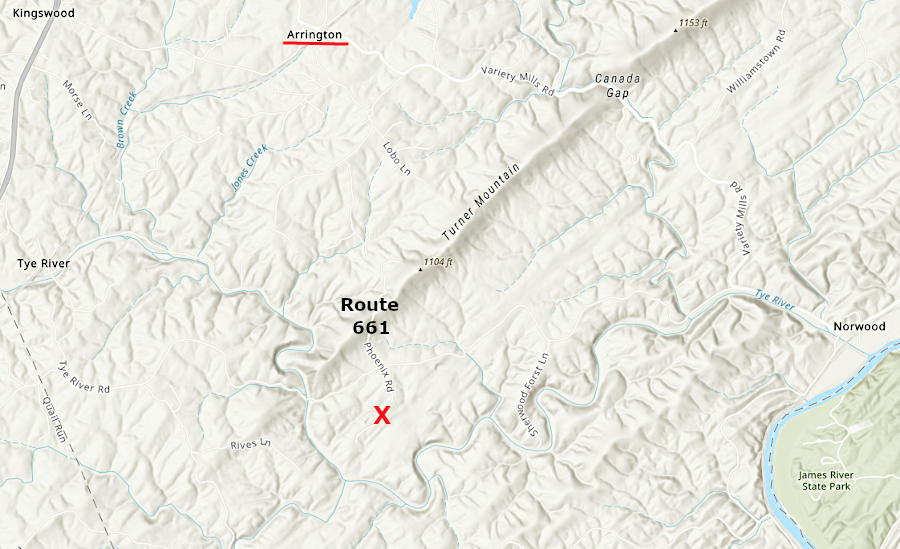
to move soapstone from the mill (red X), the Phoenix Soapstone Company used wagons to get over Turner Mountain and reach the Arrington depot
Source: US Geological Survey (USGS), The National Map
to move soapstone from the mill (red X), the Phoenix Soapstone Company used wagons to get over Turner Mountain and reach the Arrington depot
Source: US Geological Survey (USGS), The National Map
Commercial development of soapstone in Albemarle and Nelson counties started when the Albemarle Soapstone Company established Alberene in 1883 and the Virginia Soapstone Company opened quarries at Schuyler a decade later. Those companies hauled their heavy products by horse and wagon to railroad depots, then built their own tracks to reduce transportation costs.
The Albemarle Soapstone Company built the Nelson & Albemarle Railway in 1888 from its mill in Alberene south to the Warren depot of the Chesapeake and Ohio Railroad, using steam engines to haul the product. In 1901 the Virginia Soapstone Company built the Schuyler Railroad westward to the Rockfish depot of the Southern Railway. Its locomotives were powered by electricity, generated at hydropower dams on the Rockfish River.
The two companies merged in 1901 into the Virginia Soapstone Company. The Nelson & Albemarle Railway acquired the Schuyler Railroad and built track between Schuyler to Alberene. The electric line between Schuyler-Rockfish depot was altered to use steam-powered locomotives until a flood wiped out that track in 1944. The Chesapeake and Ohio Railroad operated the steam locomotives for the Nelson & Albemarle Railway until service stopped in 1963.
Further south in Nelson County, the Phoenix Soapstone Company created the small company town of Phoenix near the Tye River. It initially used wagons to haul stone over Turner Mountain to the Arrington depot of the Southern Railway using Phoenix Road (State Route 661). Other companies opened quarries nearby; all shipped to Arrington depot.
To eliminate the need for horses to make the 280 foot uphill climb to the gap through Turner Mountain, the Phoenix Soapstone Company constructed a narrow gauge railroad using steam locomotives. It was routed from the mill at Phoenix down to the Tye River, then up the valley to the Southern Railway depot. A local resident later identified the route:1
Standard Soapstone purchased the Phoenix Soapstone Company and also operated the Virginia-Chesapeake quarry in the mid-1920's. About 200 men were employed in excavating, processing, and shipping soapstone.
In 1925 Standard Soapstone added standard gauge rails to the track leading to the Arrington depot. It also built a new standard gauge line east to the Chesapeake and Ohio (C&O) Railroad depot at Norwood, on the James River.
The standard gauge lines were used only briefly. Abandoned houses from Phoenix were moved to Schuyler in 1926, creating "New Town" there. Standard Soapstone ceased operating in 1927.2
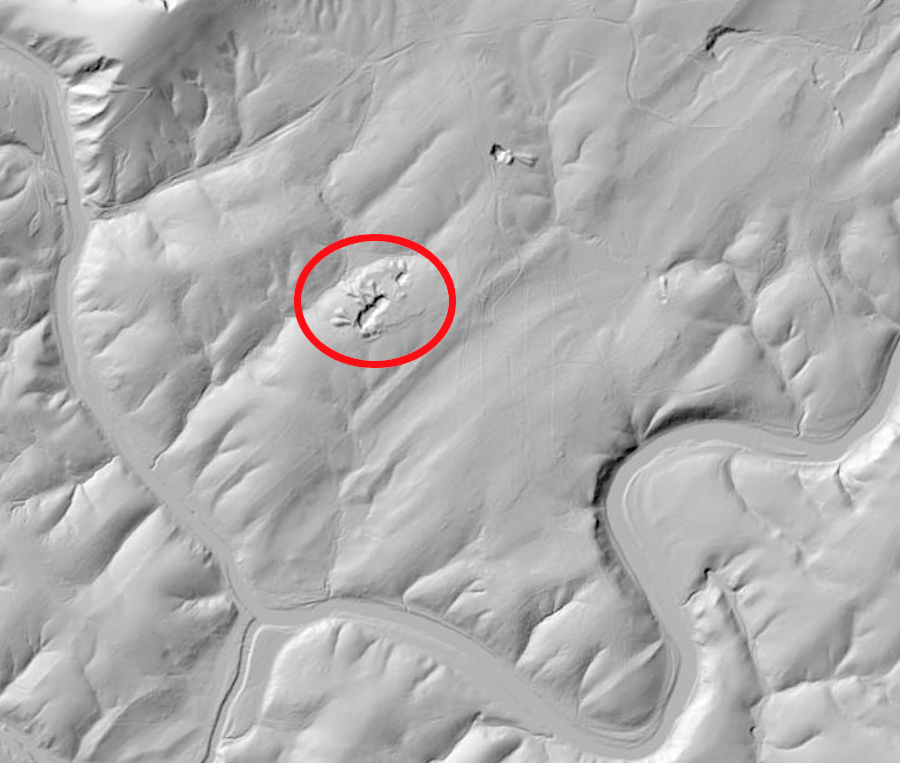
most of the Phoenix Soapstone Company buildings have disappeared, but evidence of the soapstone quarries remain
Source: US Geological Survey (USGS), The National Map
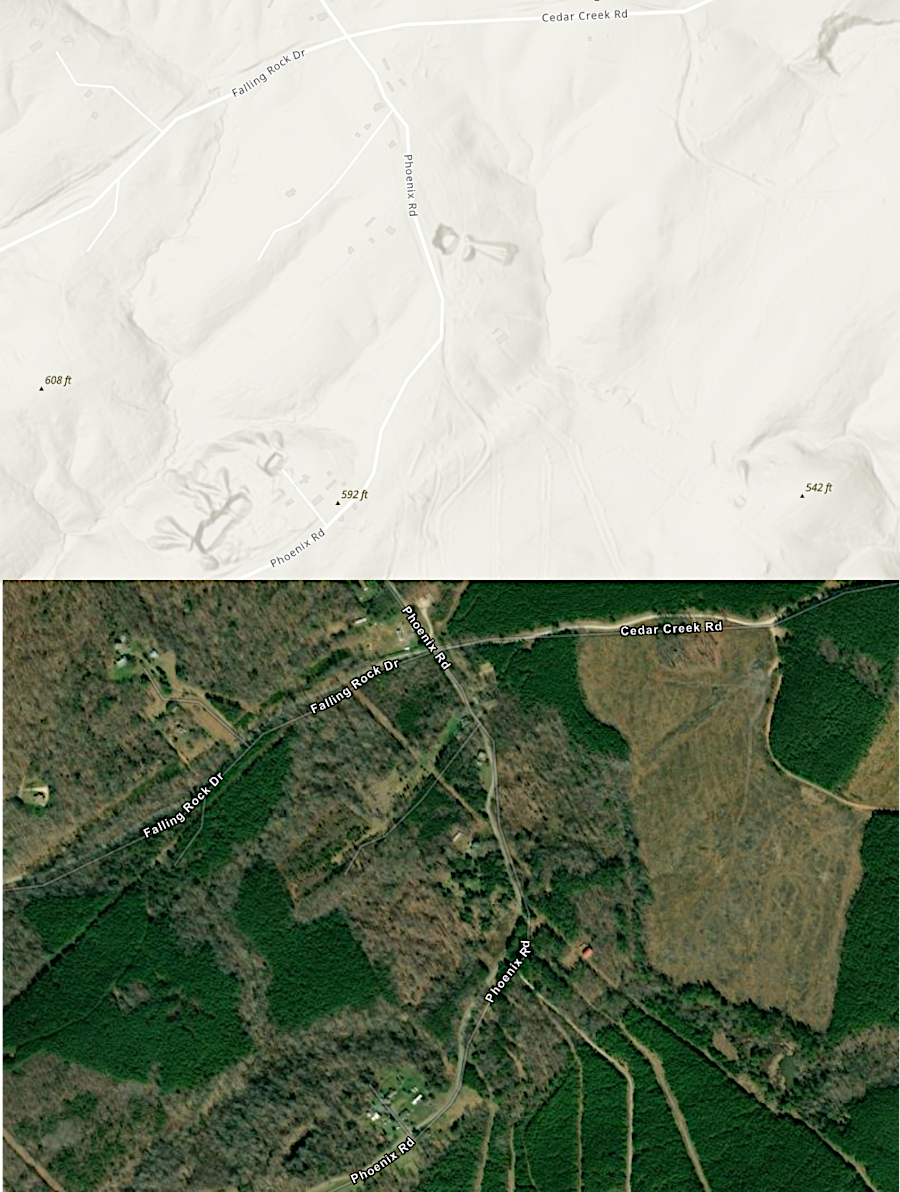
evidence of the soapstone quarries at Phoenix is now hard to find
Source: US Geological Survey (USGS), The National Map