the Dwarf Palmetto (Sabal minor) was once native in southeastern Virgina
Source: Congaree National Park, Dwarf Palmetto
the Dwarf Palmetto (Sabal minor) was once native in southeastern Virgina
Source: Congaree National Park, Dwarf Palmetto
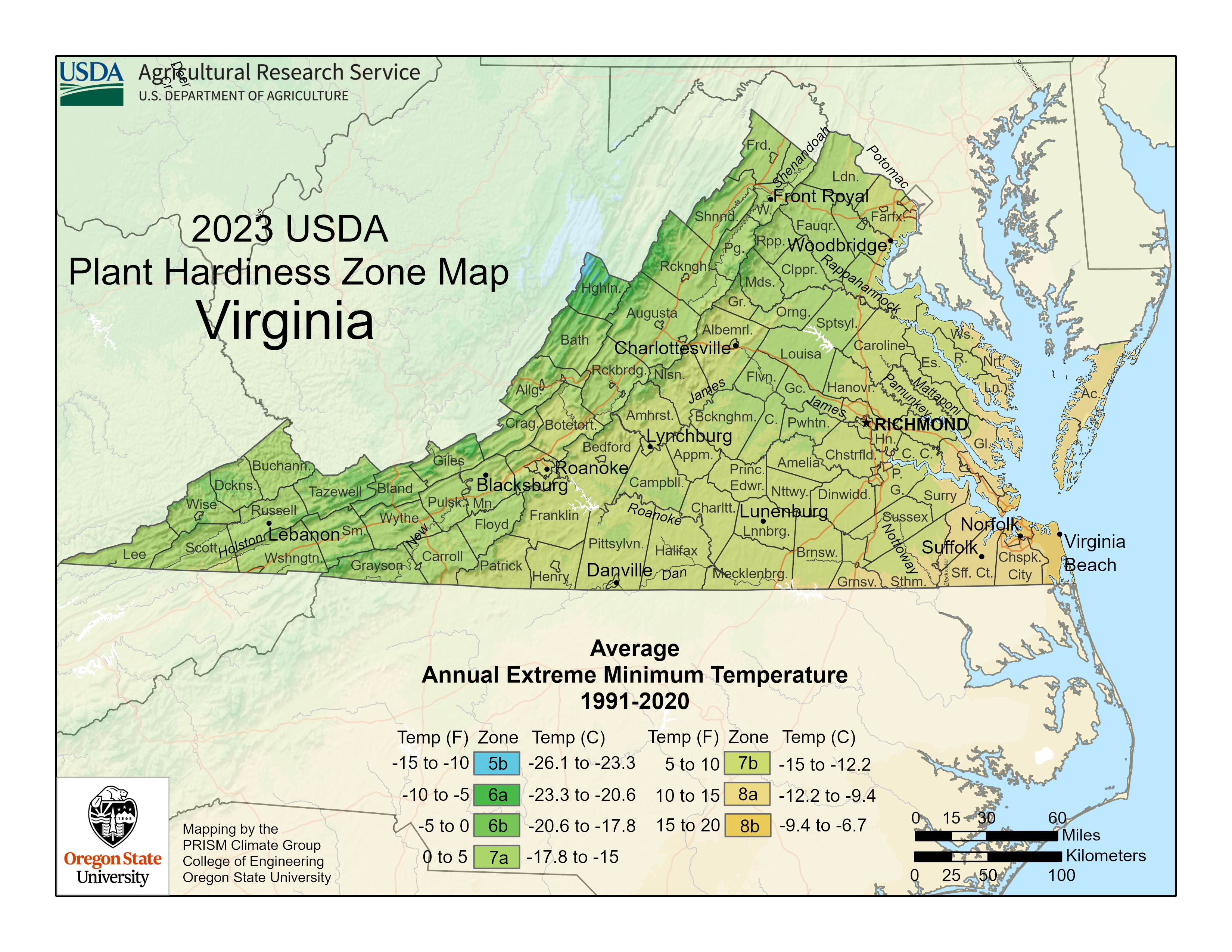
Most palm trees prefer a warmer climate than Virginia. One species native to North America, the Dwarf Palmetto (Sabal minor, also known as "Sabal minor"), is able to live as far north as Plant Hardiness Zone 7 in the southeastern corner of Virginia. Though trees can survive, it is common for frond tips and even entire fronds to be damaged and turn brown after the winter.
Dwarf Palmetto trees are typically an understory plant growing low to the ground, but may reach as tall as eight feet. Particularly if planted in a spot that is sheltered from winter winds, plants can survive occasional freezing temperatures in winter:1
the Dwarf Palmetto can survive winters in Zone 7
Source: US Department of Agriculture, Plant Hardiness Zone Map Virginia (2023)
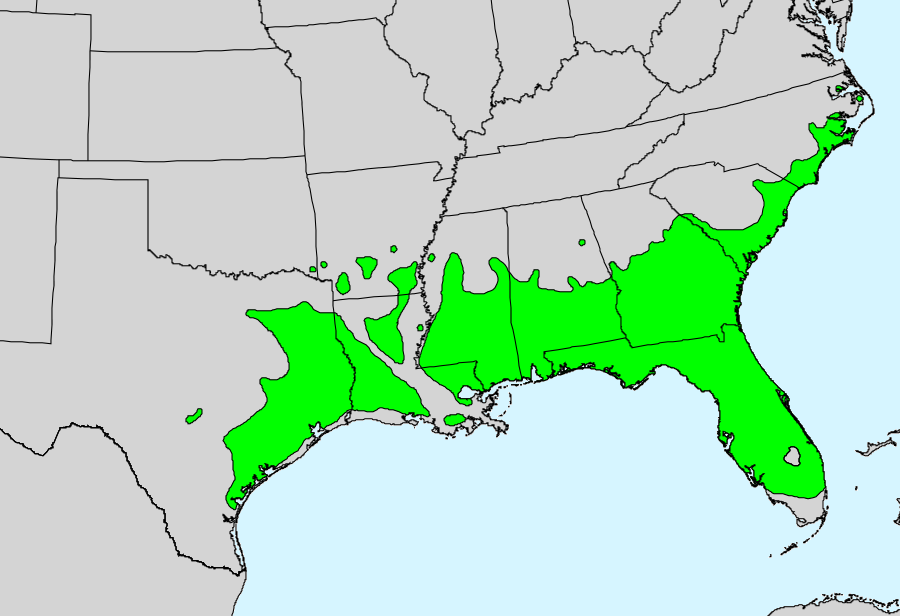
the natural range of the Dwarf Palmetto has been expanded by planting in Virginia
Source: Virginia Tech Dendrology, bush palmetto Arecaceae Sabal minor (Jacq.)
Non-native palm species are planted occasionally in Virginia. These include the European Fan Palm (Mediterranean Fan Palm), Chamaerops humilis, and the Chinese windmill palm, Trachycarpus fortunei (Hook.). A Needle Palm (em>Rhapidophyllum hystrix/em>) lives through temperatures as low as )°F. According to Virginia Tech in 2010:2
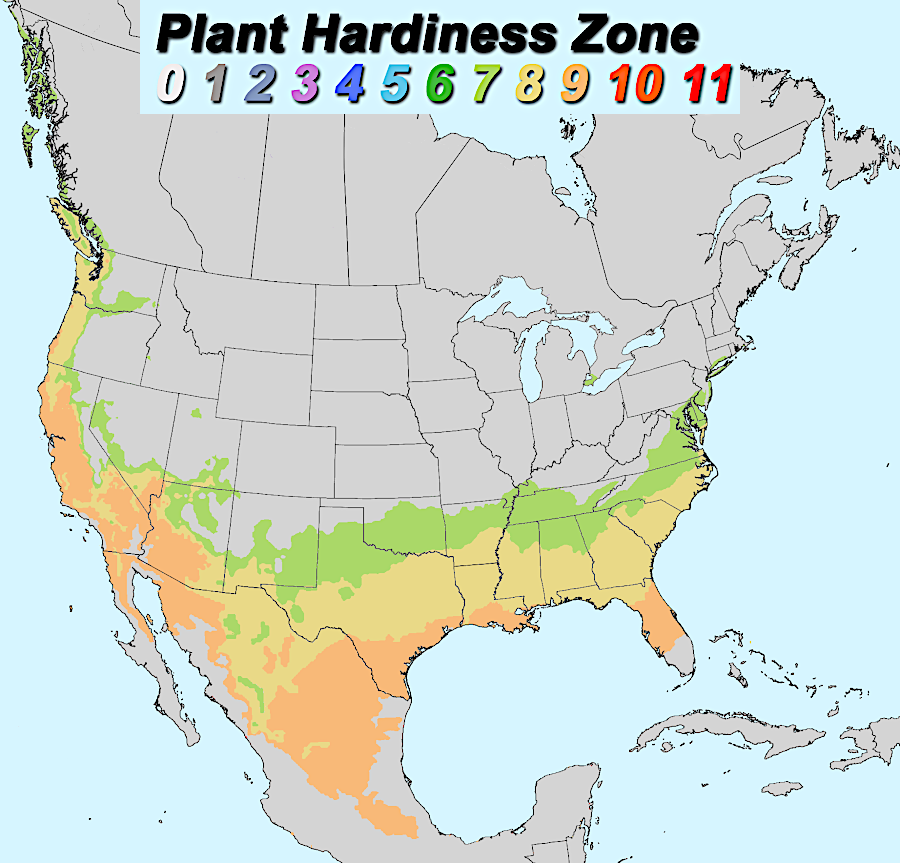
the Chinese windmill palm (Trachycarpus fortunei) can survive as far north as Juneau, Alaska
Source: Virginia Tech Dendrology, Chinese windmill palm Arecaceae Trachycarpus fortunei (Hook.)
Sabal palmetto ("Cabbage Palm") trees, which are native to Florida and along the Atlantic Ocean coastline into South Carolina, have been planted in multiple Virginia locations to create a Florida vacation vibe. On the Virginia Beach oceanfront, the palm trees were resistant to the salt spray which damaged native deciduous trees.
One of the earliest Sabal palmettos in Virginia was planted in 1970 at Jungle Golf in Virginia Beach. It survived until 2016.3
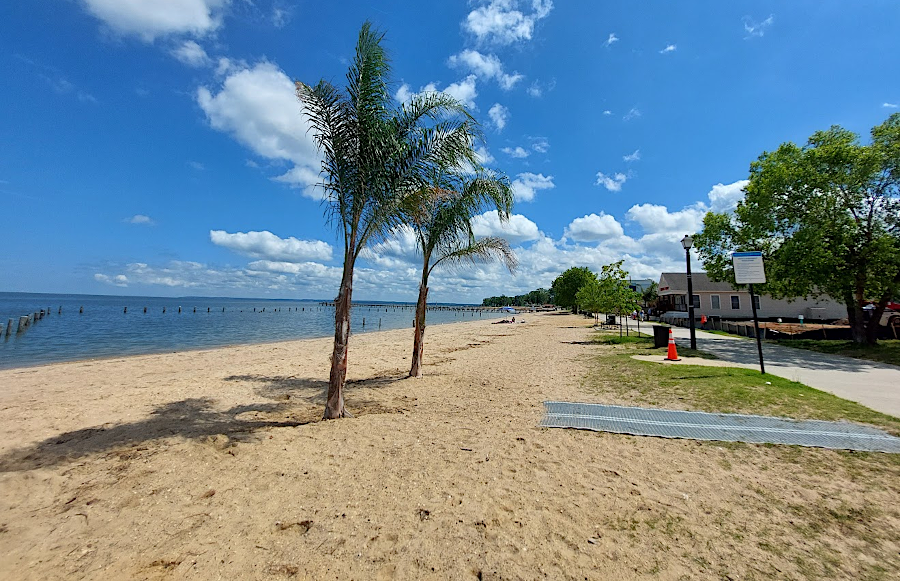
palm trees were surviving outdoors at Colonial Beach in 2025
Even in Hampton Roads, where winter temperatures were moderated by the nearby warm ocean waters, palm trees required special care starting around Thanksgiving. Paradise Palms in Virginia Beach advertises its services for shrink-wrapping trees in plastic:4
Despite wrapping, the winter of 2025 killed many of the 20' high Sabal palms which the City of Virginia Beach had planted in local parks. A series of warm winters since the last major killing freeze in 2015 had led some businesses to avoid the cost of shrink-wrapping, betting on the ability of the trees to survive brief temperatures as low as 15°F. However, five continuous days of freezing weather in 2026 was too stressful.
The city's park and landscape services administrator was able to use the Tourism Occupancy Tax to fund replacements rather than switch to Japanese hardy banana (Musa basjoo) or yuccas. The tall Sabal palms, growing at a latitude outside their normal range, added the desired sense of tropical place that attracted tourists to the city:5
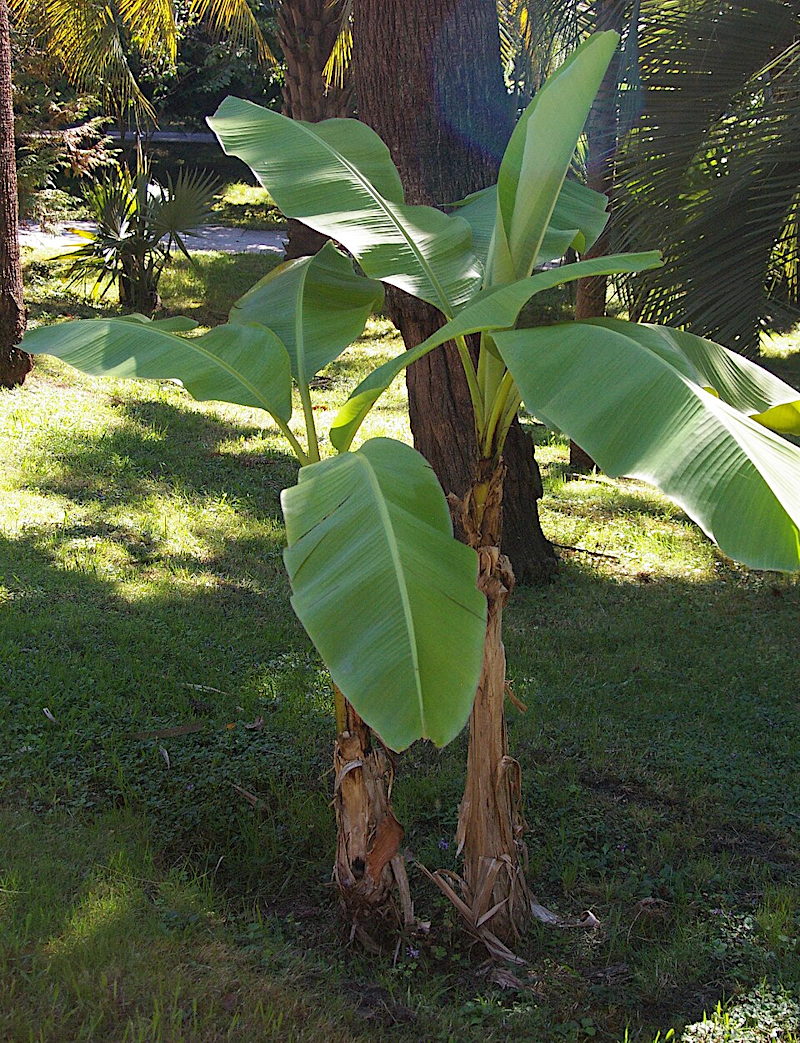
for landscaping in Virginia, Japanese hardy banana (Musa basjoo) is a more cold-hardy alternative to palm trees
Source:Wiipedia, Musa basjoo